Journey into the heart of the Ottoman Empire through its most refined art form. This article explores the breathtaking calligraphy collection within the Imperial Treasury, revealing the stories, spirituality, and masterful techniques behind these ink-and-gold masterpieces.
When you step through the massive gates of Topkapi Palace, the noise of modern Istanbul fades into a respectful silence. It is here, within the hallowed halls of the Imperial Treasury, that one finds the true soul of the Ottoman Empire. While the diamonds and emeralds often steal the spotlight, the seasoned traveler knows that the real wealth lies in the ink, paper, and gold leaf of the calligraphy collection. These are not merely written words; they are the "music of the eyes," a spiritual geometry that defined a civilization for centuries. As we explore these masterpieces in February 2026, we are witnessing an artistic legacy that transcends time, connecting us directly to the hands that held the reed pen hundreds of years ago.
The Soul of the Empire: Understanding Hat Sanatı
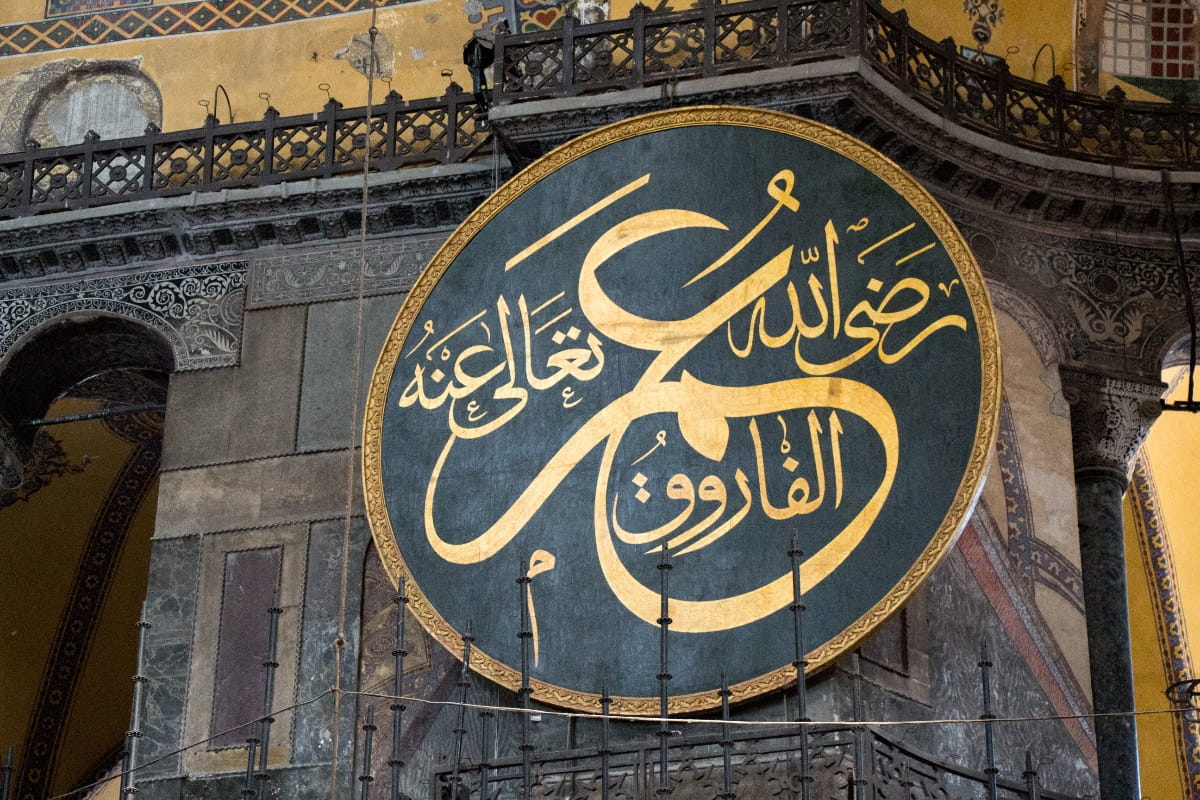
To understand the treasures housed within the palace, one must first grasp what calligraphy, or Hat Sanatı, meant to the Ottomans. In a culture where figurative painting was often limited due to religious interpretations, artistic expression exploded through the written word. The alphabet became the canvas, and the letters became the image. There is a famous saying that resonates deeply in the Islamic world: "The Quran was revealed in Mecca, recited in Cairo, and written in Istanbul."
This art form was never just about legibility. It was an act of devotion, a meditation in motion. The calligraphers, often training for decades, sought to reflect the beauty of the divine through perfect proportions and fluid lines. When you look at a manuscript in the Treasury, you are looking at the result of patience that is almost unfathomable in our fast-paced digital age. The ink used was often mixed with soot collected from the oil lamps of the Süleymaniye Mosque, imbuing the very medium with holiness.
Inside the Imperial Treasury: A Sanctuary of Ink and Gold
Walking through the exhibition halls, the lighting is kept dim to protect the delicate papers, creating an atmosphere of reverence. The collection at the Topkapi Palace Museum is unrivaled, containing some of the rarest examples of Islamic book arts in the world. These artifacts tell the story of an empire that valued the pen as much as the sword.
Among the most striking pieces are the monumental Qurans. These are not pocket-sized books; some are massive volumes where a single page is a work of art that likely took months to complete. The margins are illuminated with Tezhip (gold ornamentation), featuring lapis lazuli blues and crushed gold that still sparkle under the museum lights. The interplay between the black ink of the text and the golden halos surrounding them creates a visual rhythm that draws the viewer into a state of contemplation.
The Tughra: The Sultan’s Golden Signature
One cannot discuss Ottoman calligraphy without marveling at the Tughra. Originally a functional seal used to authenticate imperial decrees (fermans), the Tughra evolved into a complex abstract design unique to each Sultan. It is perhaps the most iconic visual symbol of Ottoman power.
In the Treasury, you will encounter Tughras that are masterpieces of illumination. They typically consist of three vertical shafts (tuğ) and two concentric loops (beyze). While the basic structure remained similar, the ornamentation changed with the trends of the centuries—from the floral simplicity of the 16th century to the Baroque flourishes of the 19th century. Seeing the Tughra of Suleiman the Magnificent up close reveals a level of detail that requires a magnifying glass to fully appreciate; tiny flowers and geometric patterns fill the spaces between the sweeping strokes of the letters.
The Hilye-i Sherif: Portraying the Prophet Without Images
Another unique treasure you will find is the Hilye-i Sherif. Since Islam discourages visual depictions of the Prophet Muhammad, Ottoman calligraphers developed a textual portrait. The Hilye describes the Prophet’s physical and moral characteristics in an intricate geometric layout.
These panels are often the crown jewels of the collection. The central text is usually contained within a circle (the sun), surrounded by crescents and rectangular panels. The aesthetic balance required to fit the text perfectly into these shapes without cramping the letters is a testament to the calligrapher's mastery. They serve as a reminder that in Ottoman art, beauty was found in the abstract and the symbolic rather than the literal.
Renowned Calligraphers and Their Legacy
The masterpieces in the Imperial Treasury are the work of celebrity artists of their time. These men were revered, often holding high status in the court. Some Sultans, like Bayezid II and Ahmed III, were accomplished calligraphers themselves, taking lessons from the masters.
Here is a look at some of the pivotal figures whose work defines the collection:
| Calligrapher | Era | Title / Significance | Contribution to the Art |
| Sheikh Hamdullah | 15th-16th Century | The Father of Ottoman Calligraphy | He revolutionized the six standard scripts (Aqlam al-Sitta), softening the lines and creating the distinct Ottoman style. |
| Hafiz Osman | 17th Century | The Master of Layout | He perfected the Hilye-i Sherif design and standardized the layout of the Quran pages used to this day. |
| Ahmed Karahisari | 16th Century | The Experimentalist | Known for his bold, breaking-the-mold style. His monumental Quran in the Topkapi collection is famous for its varied scripts and intense artistry. |
| Sami Efendi | 19th Century | The Master of Jeli | Specialized in Jeli (large scale) scripts used on inscriptions and massive panels, bringing grandeur to the late Ottoman period. |
The Tools of the Trade
The beauty of these treasures lies not just in the artist's hand, but in the materials used. The Imperial Treasury displays also shed light on the tools that made this art possible. The reed pens, or qalam, were cut with surgical precision using special knives resting on ivory plaques (makta). The angle of the cut determined the flow and thickness of the script.
The paper itself was treated with a mixture of egg whites and alum, a process called ahar. This created a smooth, glossy surface that allowed the pen to glide effortlessly. More importantly, it meant that mistakes could be corrected; the ink sat on top of the coating rather than soaking into the fibers, allowing a calligrapher to lick the tip of a finger and wipe away an error—though for the masters represented in the Treasury, errors were virtually non-existent.
Why These Treasures Matter Today
Visiting the Imperial Treasury in 2026 offers a profound contrast to our digital existence. We live in an era of ephemeral text, where words are typed, sent, and forgotten in seconds. Standing before a 500-year-old manuscript, where a single page represents weeks of devotion, grounds us. It reminds us of the weight of words and the value of patience.
These calligraphic works are not dead artifacts; they are living testaments to a civilization that elevated writing to the highest form of aesthetic expression. They bridge the gap between the earthly and the divine, the functional and the beautiful. For the traveler seeking to understand the heart of Istanbul, the calligraphy collection is not just a stop on a tour—it is a pilgrimage into the beauty of the human spirit.
Further Exploration:
To delve deeper into the world of Ottoman calligraphy and the treasures of the Imperial Treasury, consider exploring these resources:
- Topkapi Palace Museum Official Website: For information on visiting hours, exhibitions, and collections.
- Books on Ottoman Art and Calligraphy: Search for scholarly works and exhibition catalogs focusing on Islamic and Ottoman art.
- Academic Journals: Publications like the 'Journal of Islamic Art and Architecture' often feature articles on Ottoman calligraphy.
- Online Archives: Explore digital collections of Ottoman manuscripts and calligraphy from institutions like the British Library and the Metropolitan Museum of Art.